
Your cart (0items)
Your cart is empty


What is the best loose leaf tea blend? The best tea blends start with a whole-leaf single-origin tea base, then layer real whole spices, real botanicals, or real essences — never artificial flavoring or "natural flavor." Nepali Tea Traders blends single-origin Ilam tea with carefully sourced ingredients: real cinnamon, ginger, clove, and cardamom in our Nepalese Himalayan Masala (authentic Nepali chiya); organic Sicilian bergamot essence and Madagascan vanilla in Everest Earl Grey; real jasmine blossoms in June Jasmine Green; and spearmint with fennel and eucalyptus in Makalu Mint. Hand-blended, air-freighted from Nepal, and shipped from our Boston warehouse since 2017.
Why Nepal tea blends? The whole-leaf advantage
Most tea blends on US shelves are built on broken-leaf, dust, and fannings — the lowest grades of tea — then masked with artificial flavoring, "natural flavor," or added sugar to give the cup any character at all. Our Nepal tea blends tell a different story. The base is whole-leaf, single-origin black or green tea from small farms in Ilam at 4,000 to 7,500 feet — the same teas that won Gold at The Leafies and a place in The New York Times. We then layer real ingredients — whole spices, real jasmine blossoms, organic Sicilian bergamot essence — and hand-blend in small batches. The result is a blend with a quality base that tastes good even before you add the spices.
| Feature | Nepal Tea Blends (NTT) | Mass-Market Tea Blends |
|---|---|---|
| Tea base | ✔ Whole-leaf single-origin Ilam | Broken leaf, dust, fannings |
| Spices & botanicals | ✔ Real whole spices and florals | Artificial flavoring, "natural flavor" |
| Origin transparency | ✔ Single-origin Nepal base — traceable | Multi-origin commodity blend |
| Sweetness source | ✔ Naturally sweet from quality base | Often masked by added sugar/flavoring |
| Re-steepability | ✔ 2 to 3 quality infusions | 1 weak infusion, then exhausted |
| Hand-blending | ✔ Small-batch, hand-blended | Factory machine-blended at scale |
| Freshness | ✔ Air-freighted Nepal → Boston | Sea-freighted, aged stock |
The best Nepal tea blends to buy from our collection
Four blends, four different moods. Each built on a whole-leaf single-origin Ilam base, hand-blended in small batches with real spices and botanicals. Start here:
Nepalese Himalayan Masala Black Tea
Authentic Nepali masala chai (chiya). Whole-leaf Ilam black tea blended with real cinnamon, ginger, clove, and cardamom. Brew classic stovetop chiya, café-style chai latte, or double-strength for iced masala chai.
Everest Earl Grey
Classic Earl Grey on a whole-leaf Nepal black tea base, with organic bergamot essence from Sicily (Citrus Bergamia, steam-distilled), Madagascan vanilla, and dried orange peel — hand-blended in small batches. Copper-hued liquor with notes of candied citron, malt, vanilla, and sweet cream.
June Jasmine Green
Whole-leaf Nepal green tea blended with real jasmine blossoms and dried orange peel — named for "Jestha" (June) in Nepal when jasmine blooms. Pale gold liquor with notes of dried jasmine, citron, wildflower honey, and gardenia.
Makalu Mint
Cooling green-tea blend with aromatic spearmint, dried fennel, and a touch of eucalyptus. A complex herbal profile with hints of sweet citrus and zero bitterness — for clarity and calm.
Try our authentic Nepali masala chai →
Authentic Nepali chiya: the masala chai story
The word for tea in Nepal is chiya. More than a chai, chiya is a daily ritual — black tea simmered with milk and warming spices, drunk from small glasses across the Himalayan foothills from sunrise to sundown. Our Nepalese Himalayan Masala Black Tea captures that tradition in loose-leaf form: a smooth, malty Ilam black-tea base layered with real whole spices — cinnamon, ginger, clove, and cardamom — never extract, never "spice flavoring."
Brew it three ways: stovetop with milk for traditional Nepali chiya (1 heaping tsp simmered in 1 cup whole milk plus 1 cup water, sweeten to taste, simmer 5 to 7 minutes, strain); café-style chai latte with a milk frother; or double-strength over ice for iced masala chai. For the full chiya story and a stovetop recipe, read our guide: What is chiya — Nepali milk tea recipe.
Real ingredients, not artificial flavoring
The biggest difference between our blends and supermarket tea is what's actually inside the tin. Our blends use whole spices, real botanicals, and real essences — not "natural flavoring," not synthetic aromas, not added sugar. Here's exactly what's in each blend:
- Nepalese Himalayan Masala: Whole-leaf Ilam black tea, real cinnamon, fresh ginger, whole cloves, green cardamom.
- Everest Earl Grey: Whole-leaf Nepal black tea, organic bergamot essence (Citrus Bergamia, steam-distilled from Sicily, Italy), Madagascan vanilla, dried orange peel — hand-blended in small batches for an even flavor profile.
- June Jasmine Green: Whole-leaf Nepal green tea, real jasmine blossoms, dried orange peel.
- Makalu Mint: Whole-leaf Nepal green tea, aromatic spearmint, dried fennel, eucalyptus.
When to drink each blend
Each blend has a moment. Here's how to choose:
Reach for Nepalese Himalayan Masala (stovetop chiya) or Everest Earl Grey with milk — black-tea base means 40 to 70 mg caffeine per cup, about half a coffee.
Switch to June Jasmine Green — green-tea base with L-theanine for steady focus, around 25 to 35 mg caffeine. Floral and gentle, no afternoon crash.
Wind down with Makalu Mint — spearmint and fennel are traditionally enjoyed after meals to support digestion. Light caffeine from the green base.
Caffeine in our tea blends
Caffeine in our blends depends on the tea base. Black-tea-based blends (Nepalese Himalayan Masala and Everest Earl Grey) carry roughly 40 to 70 mg of caffeine per 8 oz cup, about half a typical coffee. Green-tea-based blends (June Jasmine Green and Makalu Mint) carry roughly 25 to 35 mg per cup. The added spices and botanicals don't contribute caffeine themselves. For deeper breakdowns, see our guides on black tea caffeine and oolong tea caffeine.
How to brew Nepal tea blends
Brewing varies by tea base. Black-tea blends want hotter water and longer steeps; green-tea blends want cooler water and shorter steeps. Use these starting points:
| Blend | Water temp | Steep time | Leaves per 8 oz |
|---|---|---|---|
| Nepalese Himalayan Masala | 200–212°F | 4–5 min | 2–3 g (~1 tsp) |
| Everest Earl Grey | 195–205°F | 3–5 min | 2–3 g (~1 tsp) |
| June Jasmine Green | 175–180°F | 2–3 min | 2 g (~1 tsp) |
| Makalu Mint | 175–180°F | 3–5 min | 2 g (~1 tsp) |
Wholesale Nepal tea blends for cafés, restaurants, and hotels
Are you a café running a chai latte program, a restaurant building a tea menu, or a specialty grocer looking to stock authentic loose leaf tea blends? We supply Nepalese Himalayan Masala, Everest Earl Grey, June Jasmine Green, and Makalu Mint in bulk to businesses across the USA. Whole-leaf single-origin base, real spices and botanicals, and pricing built for menu margins.
- Bulk Loose Leaf Pricing
- Chai Latte Program Ready
- Custom Tea Training
- Ships from Boston, MA
Shop USDA Organic Teas
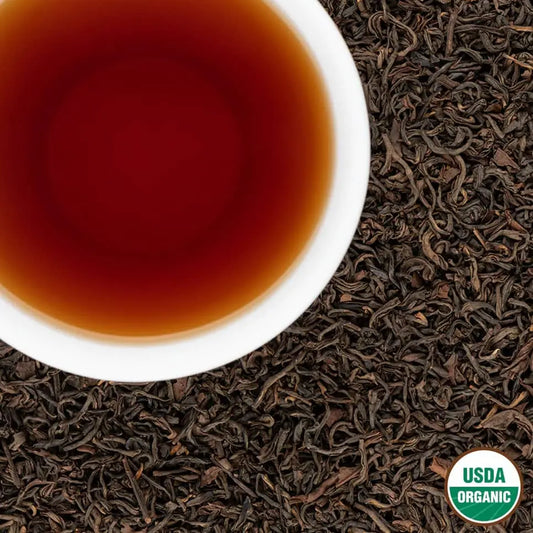
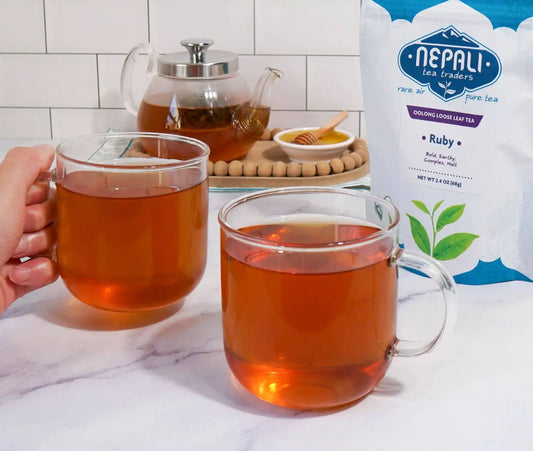
Ruby Organic Oolong Tea


Pokhara Classic Organic Green Tea


Himalayan Golden Organic Black Tea
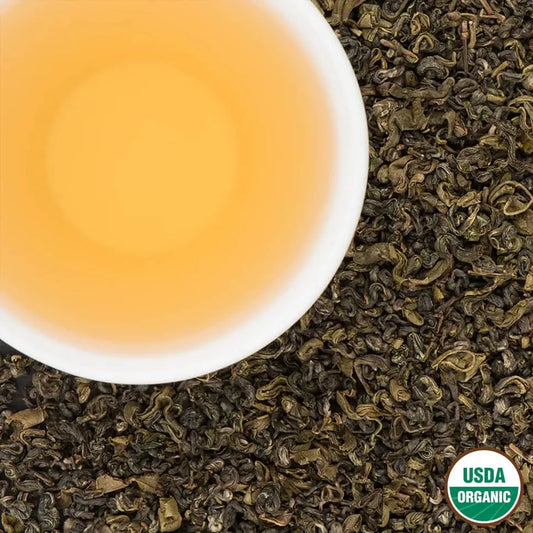
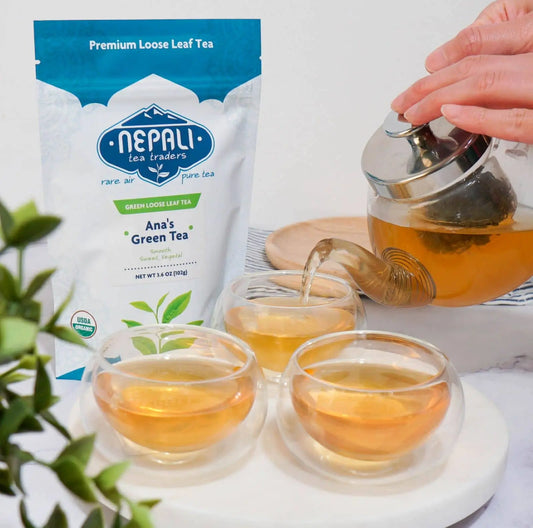
Ana's Organic First Flush Green Tea

Dragon Claw Organic Oolong Tea


Rara Willow Organic White Tea
Nepali Tea Blends FAQs
Brewing, caffeine, and ingredients—quick answers about our Nepali tea blends.
What is masala chai?
Masala chai is black tea simmered with milk and a blend of warming spices, traditionally cinnamon, cardamom, clove, and ginger. In Nepal, it is called chiya and is drunk daily from small glasses across the Himalayan foothills. Our Nepalese Himalayan Masala Black Tea is authentic chiya-style masala chai built on a whole-leaf single-origin Ilam black-tea base layered with real whole spices.
What is Nepali chiya?
Chiya is the Nepali word for tea, and specifically refers to the everyday milk-and-spice tea ritual of Nepal. Stovetop method: simmer black tea in a 50/50 mix of milk and water with cinnamon, ginger, clove, and cardamom, sweeten to taste, strain, and serve hot. For the full recipe and history, see our chiya guide on the blog.
What's the difference between chai tea and masala chai?
Technically, 'chai' just means tea in Hindi and Nepali, so 'chai tea' is redundant. Masala chai means spiced tea, the milk-and-spice preparation most Westerners think of when they say 'chai.' In Nepal, the same drink is called masala chiya. All refer to the same tradition: black tea simmered with milk and warming spices.
Where can I buy Nepali masala chai online in the USA?
You can buy authentic Nepali masala chai (chiya) directly from nepaliteatraders.com, on Amazon, or at select Whole Foods locations. We ship from Boston, Massachusetts. Orders over $60 ship free.
Are your tea blends USDA Organic?
Our tea blends are not USDA Certified Organic. Blends with added spices, florals, or botanicals require every ingredient to be separately certified, and our small-batch artisan ingredients do not all carry that certification. The whole-leaf tea base in our blends comes from the same Ilam co-ops that grow our USDA Organic single-origin teas. If you specifically need USDA Organic certified loose leaf tea, browse our Organic Loose Leaf Collection.
What does Everest Earl Grey taste like?
Everest Earl Grey is a classic Earl Grey blend built on whole-leaf Nepal black tea, with organic bergamot essence from Sicily, Italy (Citrus Bergamia, steam-distilled into a natural essence), Madagascan vanilla, and dried orange peel. The bergamot is hand-blended in small batches with the tea leaves to maintain an even flavor profile. The copper-hued liquor has notes of candied citron, malt, orange peel, vanilla, and sweet cream. It works on its own or with a splash of milk.
Does masala chai have caffeine?
Yes. Our Nepalese Himalayan Masala has a black-tea base, so caffeine runs roughly 40 to 70 mg per 8 oz cup, about half a typical coffee. The added spices (cinnamon, ginger, clove, cardamom) do not contribute caffeine themselves. Brewed stovetop with milk, the caffeine remains the same per scoop of tea, just diluted by the milk and water.
How do I brew Nepali masala chai stovetop?
In a small saucepan, simmer 1 heaping teaspoon of Nepalese Himalayan Masala in 1 cup whole milk plus 1 cup water with sugar to taste. Bring to a low boil, reduce heat, and simmer 5 to 7 minutes. Strain into a small glass and serve hot. This is the traditional Nepali chiya method, drunk daily across Nepal.
What makes June Jasmine Green different from regular jasmine tea?
June Jasmine Green is named for Jestha (June) in Nepal, when jasmine blossoms come into full bloom. It uses real jasmine blossoms blended with whole-leaf Nepal green tea and dried orange peel, not jasmine flavoring or extract. The result is a pale gold liquor with notes of dried jasmine, citron, wildflower honey, gardenia, and honeysuckle.
Can I make iced chai or chai latte with these blends?
Yes. Brew Nepalese Himalayan Masala or Everest Earl Grey at double strength (2 teaspoons per 8 oz), let cool, then pour over ice with milk and sweetener for iced chai latte. For hot chai latte, follow the stovetop chiya method or steep double-strength and froth with steamed milk.
How long do loose leaf tea blends last?
Stored properly (sealed, away from light, heat, moisture, and strong odors), our loose leaf tea blends stay fresh for 12 to 18 months. Spices and florals lose potency faster than plain tea, so blends have a slightly shorter shelf life than single-origin teas. Air-freighted from Nepal, so the date you receive it is close to the harvest and blending date.
Do you offer wholesale tea blends for cafés and restaurants?
Yes. We supply our four signature blends (Nepalese Himalayan Masala, Everest Earl Grey, June Jasmine Green, and Makalu Mint) in bulk to cafés, restaurants, hotels, juice bars, and specialty retailers across the USA. Visit our wholesale page or email us directly for pricing, sample kits, chai latte program guidance, and minimum order quantities.